Or listen on:


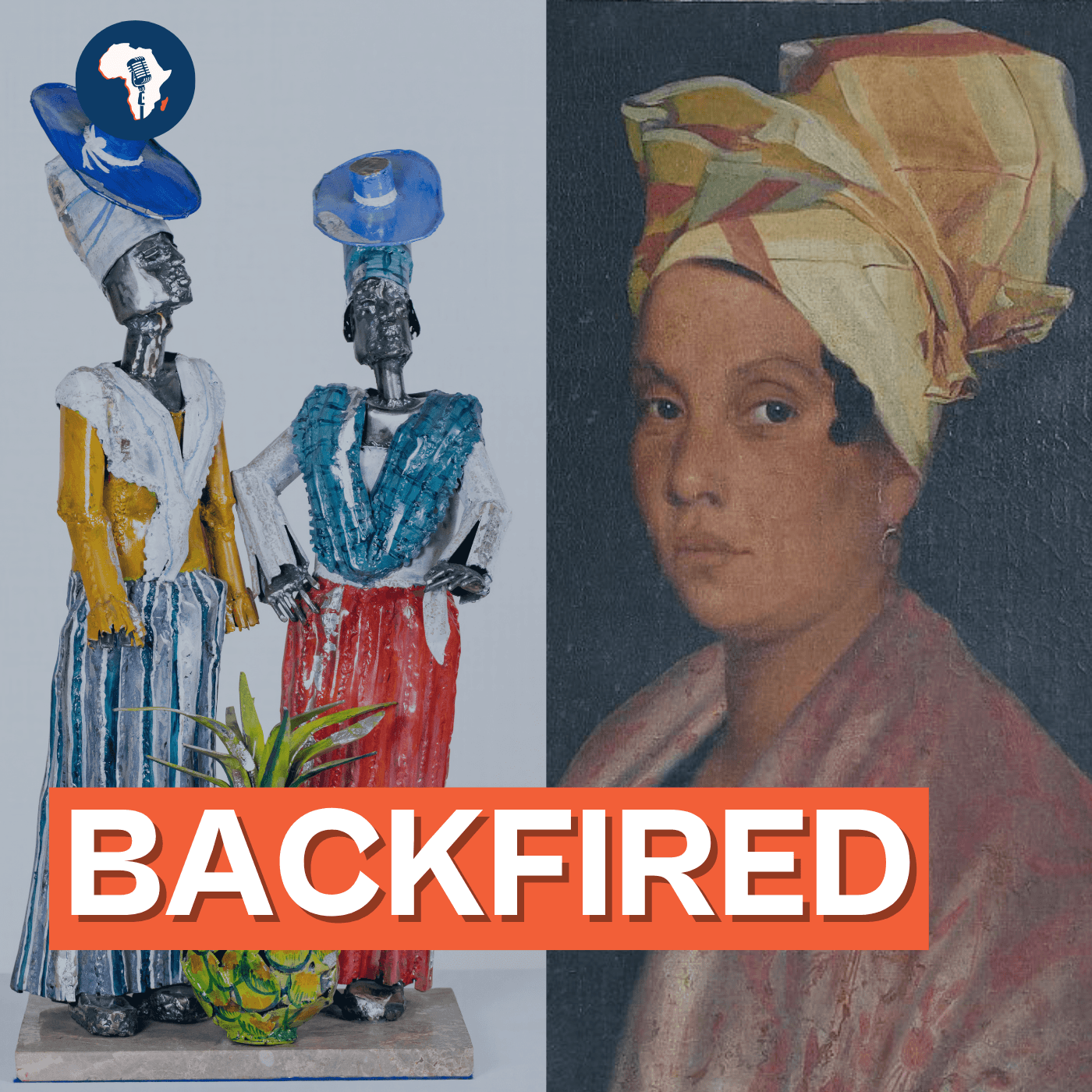
Sculptor SOKARI DOUGLAS CAMP focuses on the 1786 TIGNON LAW in Spanish-colonial Louisiana, that effectively tried to OUTLAW BLACK WOMEN'S HAIR.
THE TIGNON LAW ordered women of colour — including the roughly one thousand free black women of New Orleans — to cover their heads.
It was designed to DEMEAN and to STRIP these increasingly powerful women of their STATUS. It BACKFIRED spectacularly.
The women turned the MANDATED HEADWRAP into something dazzling: towering, brocade-like turbans that would have made onlookers do a double take even in the twenty-first century.
So GLAMOROUS were they that they swept the ATLANTIC WORLD as the most fashionable item of the age — with even WHITE WOMEN imitating them.
I go to London's October Gallery to see SOKARI DOUGLAS CAMP's new collection inspired by this history. The acclaimed British-Nigerian sculptor — who describes herself as a welder first and foremost — works in steel, rendering the creases and folds of calico, the lace of a headwrap and the tartan of a shawl in metal, studded with coins to speak to the transatlantic trade and how black bodies were "claimed" by money.
Drawing on an Italian print that first captivated her, Sokari reflects on her KALABARI roots, four decades of life in England, and the layered strands of blackness — African, Caribbean, English — that now run through her work.
With more than forty solo shows behind her, she explains why insisting on visibility, and educating "our colonizers," still matters.
I get a quick reaction from veteran MP, DIANE ABBOTT, about the show.
Exhibition: Sokari Douglas Camp's new collection FASHION and FORTUNE at the October Gallery, London
🎧 Available on all major audio platforms 🌍 Website: www.africahereandnow.com
𝕏 Host: @MartineDennis
👉 Please like, subscribe and share, and let us know what you think. Original music by Enrick Adam. Camera and edit by Ali Rafi.
00:00 Cold open: taming the black woman backfired
00:37 1786 — the law that tried to police black hair
01:15 Why force women of colour to cover their hair?
02:44 The Tignon Law and the power of free black women
03:51 How the women aggrandized the headscarf
04:11 Coins, feathers and the language of the work
04:58 The print that started it all 05:41 Flipping the script: white women imitating them
06:03 Rendering fabric in steel
07:21 Kalabari roots in the studio
08:40 A landmark show at the October Gallery: DIANE ABBOTT, MP
08:40 Forty solo shows and what this collection signifies
09:41 Facing the diaspora: the strands of blackness 09:57 "Our colonizers need education"
10:46 Welder first and foremost