Published December 4, 2025

Zambia's Copperbelt MINING POLLUTION -The Price of Global Green Energy

By MD

Or listen on:

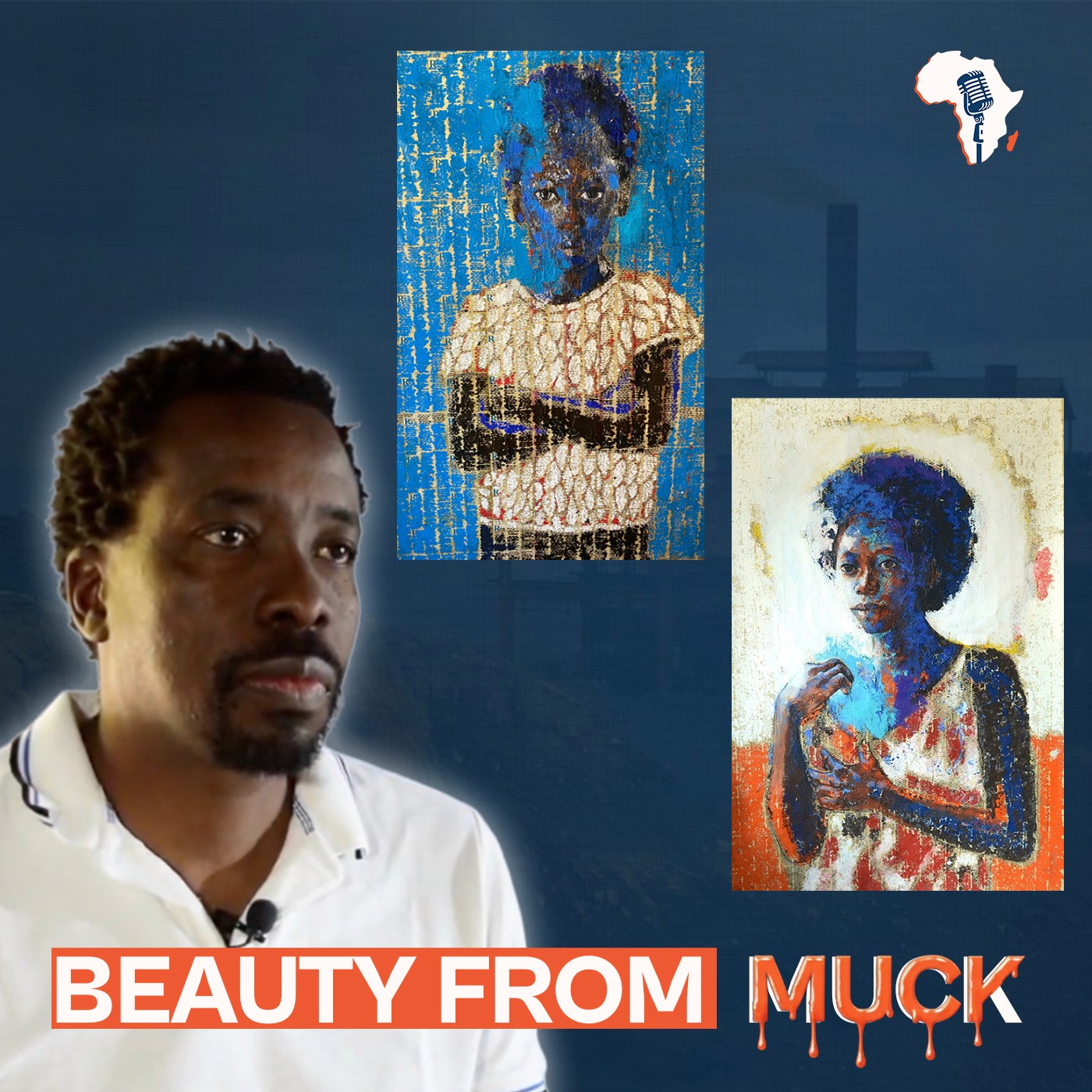
Zambian visual artist, STARY MWABA, who grew up in the country's Copperbelt, discusses the enduring environmental and human cost of resource extraction in his home region. He details the history and current reality of the infamous Black Mountain in Kitwe - a century-old toxic slag heap - that is now a site of dangerous, informal mining and re-extraction. Stary explains his unique artistic technique, which literally perforates newspaper headlines to make space for the 'little narratives' of the exploited people and children whose suffering fuels the world's 'green' revolution.


His signature method is creating a surface by collecting newspaper stories, stacking them on transparent baking paper' and then perforating the newsprint with minute holes. The idea came from an earlier installation in which he used vegetables and colour to demonstrate how plants absorb water and minerals - a critique of Chinese engagement.

The physical act of 'removing words' and perforating the paper is to symbolically 'create space for the little stories' - the marginalised, human narratives. The work is 'painstaking' requiring intense concentration, which Stary describes as a form of 'therapy'.

Stary paints from the reverse side of the perforated paper. He imposes the image so the paint literally 'seeps through the holes' and onto the front side, making the portrait a physical breakthrough of the headline.

He displays the paintings by suspending them so that the viewer can 'see both sides of the story.'


Follow Stary on instagram: starymwaba

You can see some of his works at the 37d Gallery, Lusaka


#starymwaba#Zambianartist#copperbelt#coppermining#coblatmining#greenenergy#greeneconomy#evironmentaljustice#acidrain#pollution#zambia#kitwe#blackmountain#africanart#socialcommentary#artivism#untoldstories
Zambian visual artist, STARY MWABA, who grew up in the country's Copperbelt, discusses the enduring environmental and human cost of resource extraction in his home region. He details the history and current reality of the infamous Black Mountain in Kitwe - a century-old toxic slag heap - that is now a site of dangerous, informal mining and re-extraction. Stary explains his unique artistic technique, which literally perforates newspaper headlines to make space for the 'little narratives' of the exploited people and children whose suffering fuels the world's 'green' revolution.


His signature method is creating a surface by collecting newspaper stories, stacking them on transparent baking paper' and then perforating the newsprint with minute holes. The idea came from an earlier installation in which he used vegetables and colour to demonstrate how plants absorb water and minerals - a critique of Chinese engagement.

The physical act of 'removing words' and perforating the paper is to symbolically 'create space for the little stories' - the marginalised, human narratives. The work is 'painstaking' requiring intense concentration, which Stary describes as a form of 'therapy'.

Stary paints from the reverse side of the perforated paper. He imposes the image so the paint literally 'seeps through the holes' and onto the front side, making the portrait a physical breakthrough of the headline.

He displays the paintings by suspending them so that the viewer can 'see both sides of the story.'


Follow Stary on instagram: starymwaba

You can see some of his works at the 37d Gallery, Lusaka


#starymwaba#Zambianartist#copperbelt#coppermining#coblatmining#greenenergy#greeneconomy#evironmentaljustice#acidrain#pollution#zambia#kitwe#blackmountain#africanart#socialcommentary#artivism#untoldstories

Zambian visual artist, STARY MWABA, who grew up in the country's Copperbelt, discusses the enduring environmental and human cost of resource extraction in his home region. He details the history and current reality of the infamous Black Mountain in Kitwe - a century-old toxic slag heap - that is now a site of dangerous, informal mining and re-extraction. Stary explains his unique artistic technique, which literally perforates newspaper headlines to make space for the 'little narratives' of the exploited people and children whose suffering fuels the world's 'green' revolution.


His signature method is creating a surface by collecting newspaper stories, stacking them on transparent baking paper' and then perforating the newsprint with minute holes. The idea came from an earlier installation in which he used vegetables and colour to demonstrate how plants absorb water and minerals - a critique of Chinese engagement.

The physical act of 'removing words' and perforating the paper is to symbolically 'create space for the little stories' - the marginalised, human narratives. The work is 'painstaking' requiring intense concentration, which Stary describes as a form of 'therapy'.

Stary paints from the reverse side of the perforated paper. He imposes the image so the paint literally 'seeps through the holes' and onto the front side, making the portrait a physical breakthrough of the headline.

He displays the paintings by suspending them so that the viewer can 'see both sides of the story.'


Follow Stary on instagram: starymwaba

You can see some of his works at the 37d Gallery, Lusaka


#starymwaba#Zambianartist#copperbelt#coppermining#coblatmining#greenenergy#greeneconomy#evironmentaljustice#acidrain#pollution#zambia#kitwe#blackmountain#africanart#socialcommentary#artivism#untoldstories

Zambian visual artist, STARY MWABA, who grew up in the country's Copperbelt, discusses the enduring environmental and human cost of resource extraction in his home region. He details the history and current reality of the infamous Black Mountain in Kitwe - a century-old toxic slag heap - that is now a site of dangerous, informal mining and re-extraction. Stary explains his unique artistic technique, which literally perforates newspaper headlines to make space for the 'little narratives' of the exploited people and children whose suffering fuels the world's 'green' revolution.


His signature method is creating a surface by collecting newspaper stories, stacking them on transparent baking paper' and then perforating the newsprint with minute holes. The idea came from an earlier installation in which he used vegetables and colour to demonstrate how plants absorb water and minerals - a critique of Chinese engagement.

The physical act of 'removing words' and perforating the paper is to symbolically 'create space for the little stories' - the marginalised, human narratives. The work is 'painstaking' requiring intense concentration, which Stary describes as a form of 'therapy'.

Stary paints from the reverse side of the perforated paper. He imposes the image so the paint literally 'seeps through the holes' and onto the front side, making the portrait a physical breakthrough of the headline.

He displays the paintings by suspending them so that the viewer can 'see both sides of the story.'


Follow Stary on instagram: starymwaba

You can see some of his works at the 37d Gallery, Lusaka


#starymwaba#Zambianartist#copperbelt#coppermining#coblatmining#greenenergy#greeneconomy#evironmentaljustice#acidrain#pollution#zambia#kitwe#blackmountain#africanart#socialcommentary#artivism#untoldstories

More episodes

Listen now

Lulu and William Wood on What's Driving Zambia's Food Revolution
MD

Listen now

Lulu and William Wood on What's Driving Zambia's Food Revolution
MD

Listen now

Lulu and William Wood on What's Driving Zambia's Food Revolution
MD

Listen now

Lulu and William Wood on What's Driving Zambia's Food Revolution
MD

Listen now

Young, Urban and ONLINE: What Next for Africa's Youth?
MD

Listen now

Young, Urban and ONLINE: What Next for Africa's Youth?
MD

Listen now

Young, Urban and ONLINE: What Next for Africa's Youth?
MD

Listen now

Young, Urban and ONLINE: What Next for Africa's Youth?
MD