
Or listen on:


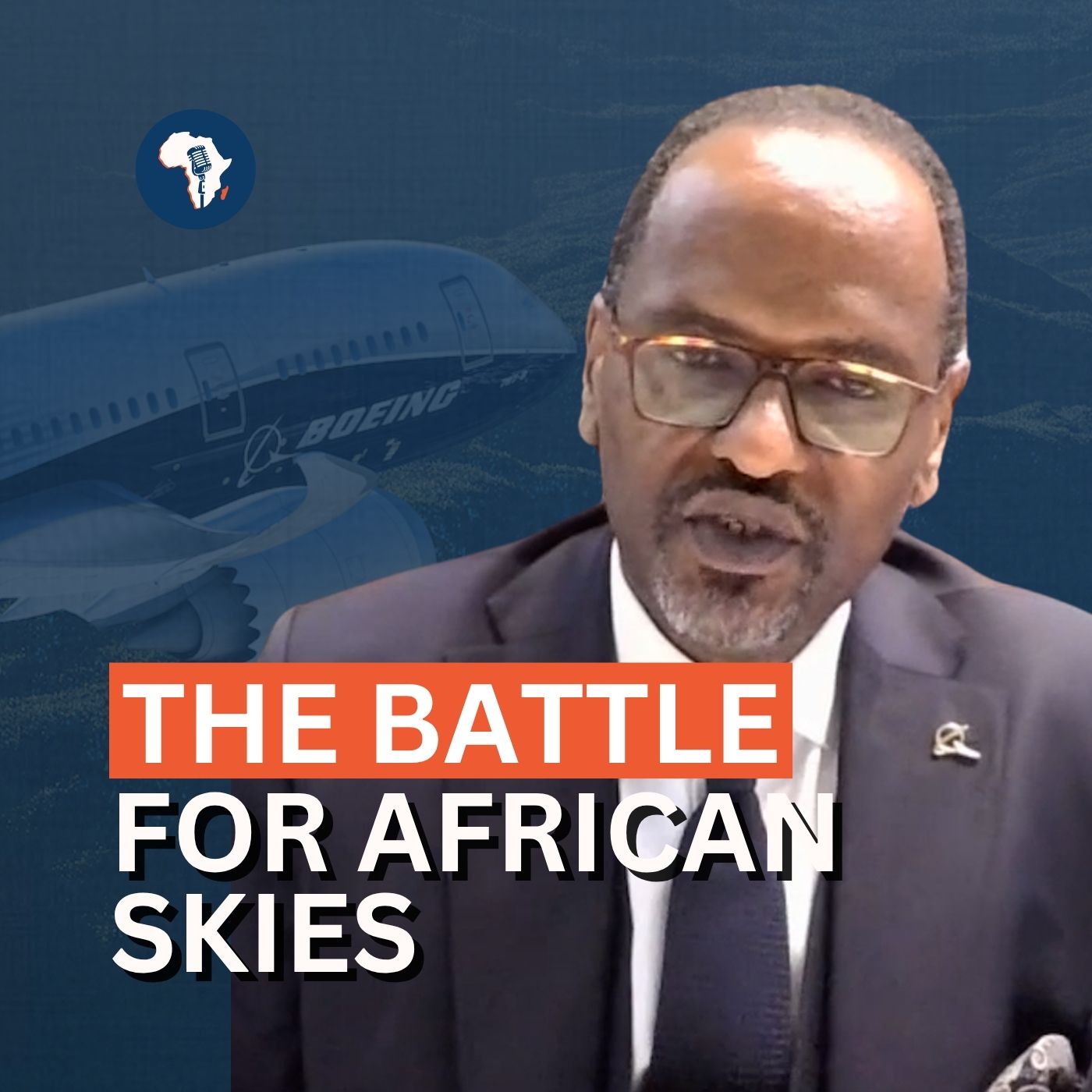
Africa's Aviation Future: Insights from Henok T. Shawl, BOEING Africa Managing Director
HENOK TEFERRA SHAWL explores the promising growth and ongoing challenges within Africa's aviation sector in our conversation which we recorded on March 3 - just as the US/Israel war with Iran was getting underway.
Henok, a seasoned expert in international relations and aviation, opened Boeing's Africa HQ in Addis Ababa, the Ethiopian capital, in 2025. Find out how infrastructure, policy, and training are shaping the future of African aviation.
Main Topics Covered:
*The role of Boeing and other stakeholders in developing African aviation infrastructure and capacity
*Opportunities from Africa's demographic growth, intra-African trade, and policy initiatives *Challenges posed by high operating costs, fuel prices, and governance issues
*The potential of low-cost carriers (LCCs) and sustainable aviation fuels (SAF) to transform the sector
*The importance of regulatory cooperation and regional integrations like the Single African Air Transport Market (SAATM)
*Training and developing local aviation professionals for exponential growth Key Insights: *Africa's airline industry has shown resilience despite disruptions, with a projected
*Africa's airline industry has shown resilience despite disruptions, with a projected addition of 1,200 new aircraft over the next 20 years.
*The continent’s passenger numbers are growing faster than other regions, driven by urbanization, a rising middle class, and policy initiatives like free trade agreements.
*Infrastructure investments—including the new $12 billion Bole International Airport expansion in Ethiopia—are critical for accommodating growth.
*The high cost of fuel in Africa remains a significant barrier but is coupled with efforts towards developing sustainable aviation fuels (SAF).
*Effective governance and professional management are vital; Ethiopian Airlines exemplifies a successful model. *Collaboration among governments, the African Union, and industry players is accelerating policy harmonisation and regional market opening.
Timestamps:
00:00 - The significance of establishing Boeing’s Africa office in Addis Ababa
7:00 - The prospects and headwinds facing African airlines today
09:00 - The role of Boeing and industry groups in supporting policy implementation (SATA, SAATM)
11:00 - Infrastructure investments in airports across Africa as growth enablers
13:00 - Governance and professionalism as keys to airline success 15:00 - Projected demand for 1,700 new aircraft in Africa over 20 years
17:00 - The importance of intra-African trade and low-cost carriers in the continent’s aviation landscape
20:00 - Training African professionals: Boeing’s initiatives and regional workforce development
23:00 - The rise of low-cost carriers and infrastructure strategies for affordable travel 25:00 - Fuel costs and the shift towards sustainable aviation fuels (SAF) in Africa
29:00 - Policy gaps and the need for accelerated government action to unlock Africa’s aviation potential
32:00 - Boeing’s role in growing the aviation ecosystem and supporting local manufacturing 33:00 - Final thoughts on collaboration, professional management, and future opportunities

