
Or listen on:


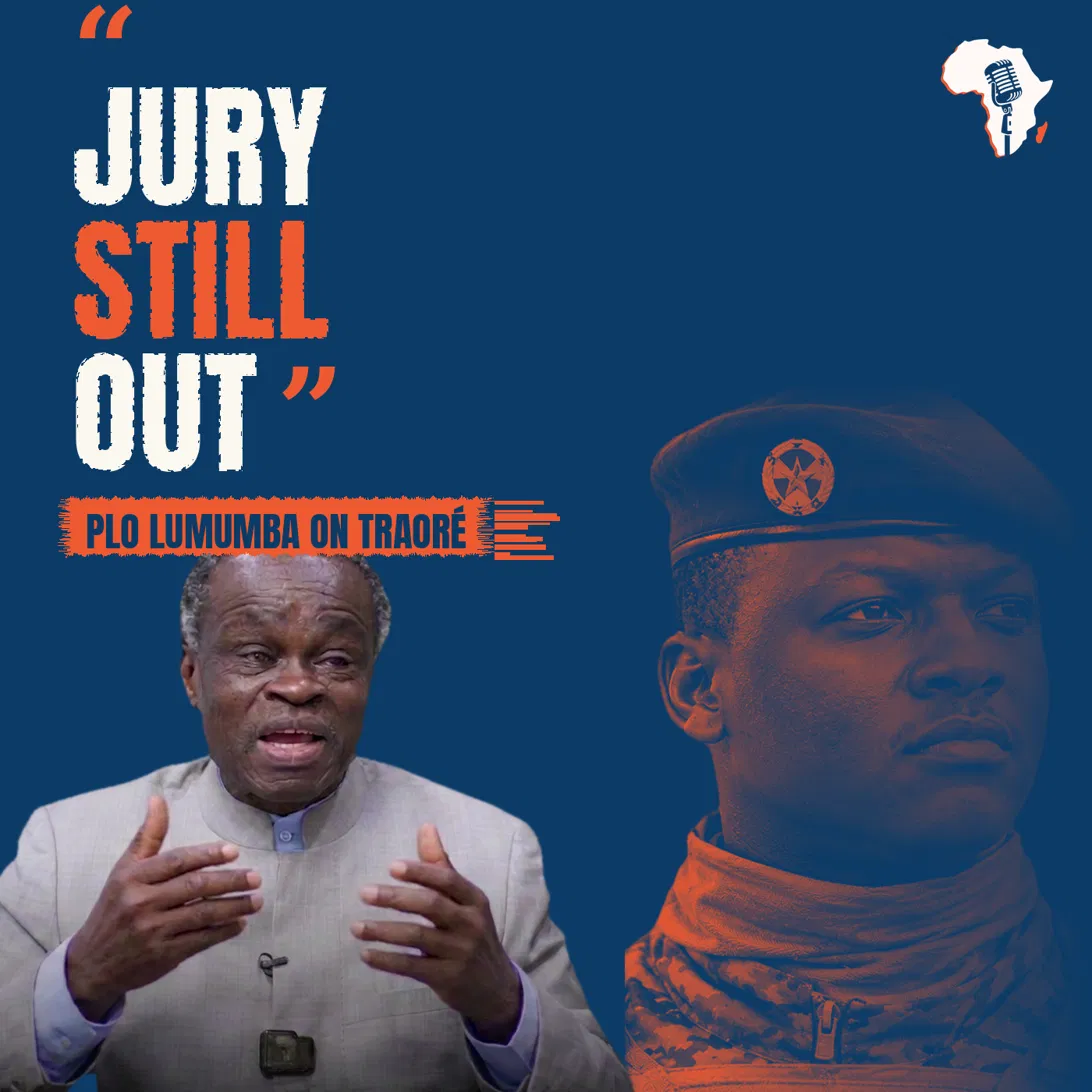
PLO Lumumba on ethnicity, Traore's rule, power in the Sahel, and Africa’s future
We speak with Patrick Loch Ochieng Lumumba, widely known as PLO Lumumba, about African politics, identity, and the continent’s struggle to build stable, people-centered governance.
PLO reflects on his own journey as a public intellectual, from his name and upbringing to his education in Belgium, his martial arts background, and how he wants to be remembered
PLO Lumumba explains how he came by the name PLO: which comes from his initials, and why the name became part of his public identity.
*He discusses the legacy of being named after Patrice Lumumba and how that shaped his awareness of African history and anti-colonial politics.
*He shares how studying in Belgium happened through scholarship and academic opportunity rather than a deliberate plan.
*He argues that public speaking comes naturally to him and says his public persona is different from his private one.
*He traces his political thinking to Pan-Africanists like Julius Nyerere and Samora Machel, especially their emphasis on moving beyond sloganeering and ethnic allegiance.
*He says ethnic identity has been weaponized by political elites across Africa to win office, access resources, and entrench power.
*He proposes proportional representation and rotational office holding as possible ways to reduce the zero-sum nature of politics in ethnically diverse countries.
*He says constitutional reform alone cannot eliminate “political bad manners” if the deeper culture of politics remains unchanged.
*He argues that prosperity and better resource management can reduce the intensity of ethnic competition for power.
*He points to Ghana and Tanzania as cautiously hopeful cases, while saying Rwanda, Burkina Faso, and the Sahel remain uncertain or too early to judge.
*He warns that expelling former colonial powers only to invite new external powers can amount to “swapping one slave master for another.”
*He says Africa is still disorganized regionally and continentally, making it vulnerable in a new global scramble for minerals and influence.
*He describes himself as a committed public intellectual, not just an orator, and says he values disagreement because it sharpens ideas.
*He recalls being deported from Zambia after comments about the treatment of opposition leader Hakainde Hichilema.
*He closes by saying he wants to be remembered as a warrior for truth, justice, and an Africa that stands on its own feet.
00:00 - Burkina Faso, foreign influence, and whether regime change is truly a success
00:27 - Who PLO Lumumba is and why his name matters
00:56 - Why Martine Dennis went to Nairobi to speak with him
01:22 - The burden and meaning of being named after Patrice Lumumba
03:16 - How he ended up studying in Belgium
04:14 - Private self versus public persona
05:13 - What shaped his Pan-African politics
06:39 - Samora Machel, ethnicity, and the “tribe must die” idea
07:05 - Why identity politics is resurging across Africa
08:29 - Can African constitutions solve ethnic politics?
10:25 - Why he supports proportional representation and rotation
12:50 - Why prosperity matters more than constitutional words
13:20 - The Congo example and the cost of disorganization
16:11 - Ghana, Tanzania, and other countries that give him hope
18:08 - What would have to happen for Rwanda to become a model
18:36 - Why Burkina Faso is too early to call a success
20:25 - The danger of replacing Western influence with Russian, Chinese, or other influence
21:49 - The rise of executive power grabs across the continent
23:15 - Politicized armies, ethnic capture, and weak institutions
24:08 - The new scramble for Africa and why regional blocs are failing
26:27 - How he sees himself as a public intellectual
28:45 - Why he tries to be measured and write to leaders first
29:14 - The Zambia deportation episode
30:06 - How he wants to be remembered
31:01 - Martial arts, discipline, and what he does for fun
#plolumumba #kenya #traore

