Or listen on:


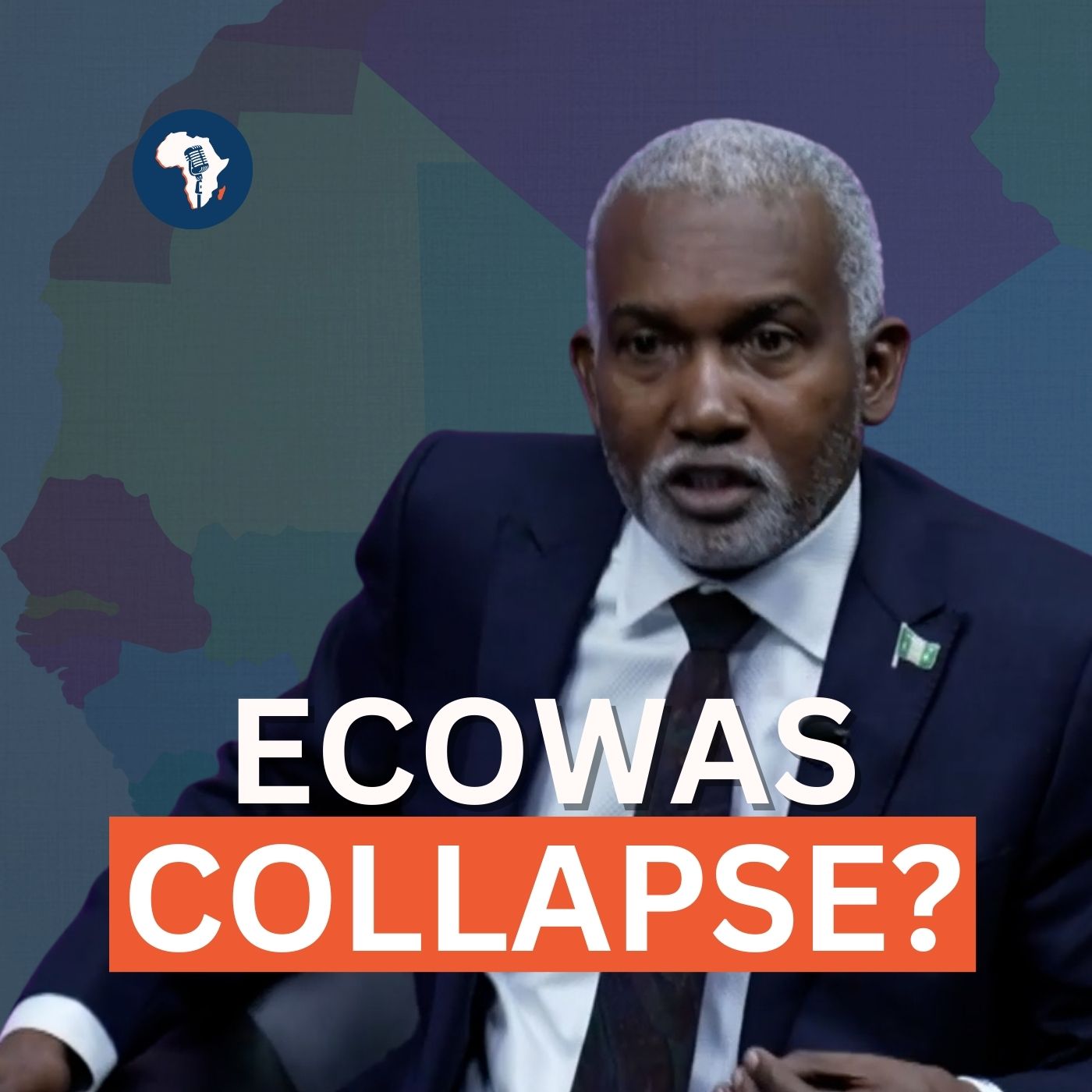
Nigeria's Foreign Minister, YUSUF TUGGAR, and his Ghanaian counterpart, SAMUEL ABLAKWA sat down with me at CHATHAM HOUSE to explore the complex security dynamics in West Africa, including threats from terror groups, regional cooperation efforts, and the importance of self-reliance and local solutions.
Before a live audience, the ministers discussed the latest ECOWAS initiative of a standby force of about 1600 and a larger contingent of around 5000 security personnel. They both agreed suggestions that ECOWAS had been severely weakened by the departure of the three Sahelian states - Mali, Burkina Faso and Niger (AES) - were exaggerated. ECOWAS ,they insisted ,was 'bouyant'. Both Minister Tuggar and Minister Ablakwa were keen to emphasise ongoing exchanges with the AES and that security cooperation was uncompromised.
I also had a 1+1 with Minister Tuggar earlier in day during which we delved a little deeper into Nigeria's regional security responsibilities and, more generally, Nigeria's foreign policy.
Key Topics:
*The proliferation of weapons and increasing attacks in the region, claiming at least 44 lives daily
*The role of regional military structures like the multinational joint task force and efforts to update security architectures
*The evolution of the ECOWAS security initiatives, including the new Coalition of the Willing and challenges faced by previous frameworks like the Accra Initiative
*Diplomatic efforts to rebuild trust among countries in the Sahel, notably Nigeria's and Ghana's bilateral relations with Mali, Burkina Faso, and Niger
*The importance of framing security issues as transnational violent extremism, not solely religious warfare
*The need for regional ownership of security strategies, emphasizing Nigeria’s leadership and contributions
*Addressing root causes such as governance deficits, unemployment, and local economic development like infrastructure projects
*The global implications of regional insecurity, including energy markets and potential recession risks
00:00 - The regional security crisis in West Africa and the need for multilateral collaboration
00:36 - The daily toll of attacks and the impact on regional stability
0:50 - Challenges of failed states, ungoverned spaces, and the epicenter of terror in the Sahel
2:00 - Existing security architectures, including hot pursuit frameworks and cross-border cooperation
3:42 - The evolving ECOWAS security initiatives, including the new Coalition of the Willing 4:00 - The decline of the original Accra Initiative and political suspicions around regional efforts
5:12 - Deployment of troops and the strategic approach to tackling insurgency
6:36 - The importance of framing violent extremism beyond religious narratives
7:22 - Nigeria's bilateral and regional security efforts and regional cooperation via ECOWAS 8:52 - The cooperation among Sahelian countries and Nigeria’s engagement strategies
9:08 - The significance of regional solutions led by African countries, avoiding externally imposed frameworks
11:35 - The success of regional-led peacekeeping models like ECOMOG and local solutions 12:40 - Challenges of cross-border conflicts like farmers versus herders and the need for coordinated approaches
13:19 - Funding security efforts and Nigeria’s role in financing regional peace and stability 14:14 - The strength of ECOWAS despite perceptions of weakening, and Nigeria’s historical leadership
15:34 - Nigeria’s contributions to anti-colonial struggles and continental leadership recognition
16:58 - Addressing root causes: governance, unemployment, and infrastructure development
19:36 - Misunderstandings of Nigeria’s security situation in the West and global perceptions 20:15 - The impact of global energy markets and the war in the Gulf on Africa’s economy 21:17 - Mitigation strategies if critical regions like the Strait of Hormuz are compromised, including oil refinery developments